
Tim Burton's Natal Chart
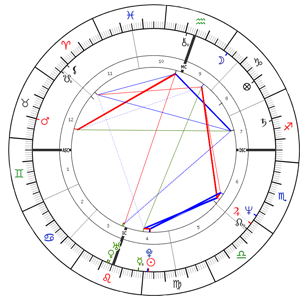
Tim Burton has his Mercury, Sun, and Pluto conjunct. This alignment could indicate that he possesses a unique ability to convey deep and complex themes through his creative work. The conjunction of the Sun with Mercury often implies an inventive mindset—Burton likely thinks outside the box and expresses these ideas artistically. The presence of Pluto amplifies this effect by adding intensity and depth to his thoughts and expressions; it may also suggest themes of darkness or taboo which are prevalent in many of his films. Overall, this astrological configuration might reveal why Burton’s art often delves into fantastical worlds where he explores the strange aspects of life, death, love, and identity—all delivered with a distinctively whimsical yet haunting aesthetic that has become synonymous with his style.
Tim Burton has his Neptune in Scorpio conjunct Jupiter in Libra. This alignment enhances his creative vision, blending emotional depth with a sense of balance and harmony. Neptune in Scorpio amplifies Burton's ability to tap into the subconscious, allowing him to explore profound themes related to transformation and rebirth, often embracing the macabre elements found within human nature. This placement suggests a fascination with the mysterious and unseen forces that drive people’s behaviors and dreams. On the other hand, Jupiter in Libra brings an element of sociability and charm to his work. It imbues his narratives with themes of relationships, justice, and aesthetics—allowing for rich character interactions steeped in moral dilemmas or partnership dynamics. These characters are often caught between conflicting desires or principles that mirror real-life complexities. The combination of these planetary positions facilitates Burton's unique storytelling approach—where he merges darkness with lightheartedness through visually striking imagery while maintaining underlying philosophical messages about acceptance, belonging, or the pursuit of happiness amidst chaos.
Moreover, this blend encourages a keen sensitivity toward social issues reflected in his films which engage audiences yet resonate on both emotional and intellectual levels: from “Edward Scissorhands”’ exploration of isolation versus community acceptance to “The Nightmare Before Christmas,” which delves into personal identity during times of change.
Tim Burton has his Midheaven in Aquarius. This unique astrological positioning suggests that Burton's career is not only marked by innovative creativity but also an underlying sensitivity to societal themes and personal healing. The placement of the Midheaven in Aquarius often points to a distinctiveness in public persona, emphasizing traits such as originality and an affinity for the unconventional. This aligns seamlessly with Burton’s penchant for quirky storytelling and vividly imaginative worlds.
The conjunction of Chiron, known as the wounded healer, offers further depth to our understanding of his artistic journey. It implies that his professional path may involve grappling with personal wounds or insecurities—both his own and those resonating within society at large—and transforming these experiences into art that resonates on a profound level with audiences. Films like Edward Scissorhands or The Nightmare Before Christmas exemplify this theme; they reflect a struggle between acceptance and alienation, showcasing characters who navigate their inner turmoil while simultaneously challenging societal norms. Burton's unique lens brilliantly unearths emotional truths through fantastical narratives—not merely serving escapism but inviting viewers to confront their vulnerabilities alongside him. His storytelling extends beyond mere entertainment; it acts as a mirror reflecting collective fears, joys, and identity crises common across humanity.
Uranus, the ruler of his Midheaven is conjunct Venus. They are both in Leo. This powerful conjunction emphasizes a dynamic interplay between personal expression and public persona, infusing Burton's work with a sense of bold creativity that resonates on various levels. Leo's influence imbues his narratives with an inherent dramatism and flair for the theatrical, allowing audiences to engage not just with captivating visuals but also with profound emotional undercurrents. The relationship between Uranus and Venus suggests a revolutionary approach to art; Burton often challenges conventional beauty standards while celebrating individuality in all its forms. This can be seen in characters like Edward Scissorhands or Sally from The Nightmare Before Christmas—figures who defy societal expectations yet evoke deep empathy through their struggles for acceptance.
Moreover, this aspect highlights innovation within tradition—the way Burton pays homage to classic storytelling tropes while reshaping them into something distinctly his own. By blending gothic motifs with whimsical elements, he creates rich tapestries that invite viewers to explore complex themes of love, isolation, and self-discovery. Incorporating unexpected twists aligns perfectly with Uranian energy—a force synonymous with unpredictability and freedom. As such, Burton’s stories unfold in ways that keep audiences guessing; they spark conversations about what it means to belong or stand apart from the crowd.
Ultimately, this powerful conjunction serves as both foundation and inspiration for Tim Burton’s oeuvre—an invitation for each viewer to reflect upon their own journey within the larger narrative of humanity where acceptance often comes entwined with adversity but leads ultimately toward authenticity and connection.